
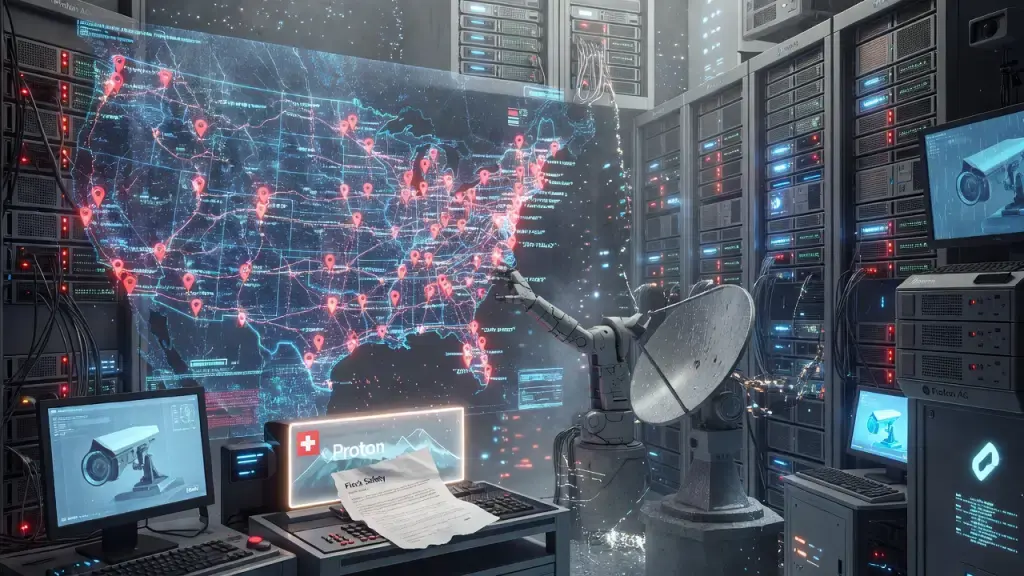
A detailed map charting the locations of Flock Safety's automatic license plate reader cameras is now hosted on servers in Switzerland, beyond the easy reach of the company that wanted it taken down. Proton AG, the firm behind Proton Mail and Proton VPN, stepped in to preserve the dataset after Flock sent a cease-and-desist letter to Joshua Michael, the security researcher who built the original map from leaked information. The episode has turned a niche surveillance-tracking project into a test case for how far companies can go to suppress public scrutiny of their own technology.
A Map Born From Leaked Data
Michael's original Flock Surveillance Map compiled locations of the company's automatic license plate readers, devices used widely by police departments and some private entities to photograph and log passing vehicles. The project relied on leaked data rather than anything Flock published voluntarily, which is precisely why the company moved against it. That original map still exists, but access is now limited to users inside the United States. Anyone trying to reach it from outside the country needs a VPN to get around the restriction, an irony not lost on privacy advocates given that VPNs exist largely to shield users from exactly the kind of tracking these cameras perform.
Why Jurisdiction Matters
Proton's decision to host a mirror of the map on Swiss infrastructure is not incidental. Switzerland's legal framework around data and privacy has long made it an attractive base for services that expect pressure from foreign companies or governments. Hosting the dataset there does not make Proton immune from every possible legal maneuver, but it does mean Flock would need to pursue action through a jurisdiction with different standards and slower, less predictable outcomes than a domestic cease-and-desist letter typically produces. Proton has framed the decision as a matter of principle rather than convenience. "You have a right to know who's recording you when you leave home, especially when a private company controls the data and it's unclear how law enforcement uses that information," the company said in explaining its move.
The Underlying Privacy Debate
License plate readers sit at an uncomfortable intersection of public safety and surveillance. Law enforcement agencies that deploy Flock's cameras argue the technology helps locate stolen vehicles, track suspects, and respond faster to crime. Critics point to a different record: documented cases of officers misusing camera data to track romantic partners, and at least one case in which a lapse in police procedure contributed to a mistaken identity. Because much of this infrastructure is owned and operated by a private company rather than a government body, the usual channels for public oversight, records requests, and accountability do not apply in the same way.
What the Map Can and Cannot Show
Proton's version lets users search by ZIP code to see camera locations near homes, schools, and daily routes, giving residents a concrete sense of how extensively their movements might be logged. It is worth being clear about the map's limits, however. The data reflects a snapshot from November 2025, not a live feed, so camera placements may have changed since then. MapQuest has since released its own tracker covering ALPR cameras from Flock and other vendors, offering a more current reference point. Michael's work, and Proton's decision to keep it accessible, underscore a larger pattern: as private surveillance networks expand largely outside public view, the tools that map and explain them become as consequential as the cameras themselves.