AEW returns to pay-per-view on Saturday, October 17th, with WrestleDream emanating from Orlando's Addition Financial Arena, featuring a world title defense built around an entirely new eight-man format. Will Ospreay puts his AEW World Championship on the line in the promotion's first Clockwork Carnage match, while Mercedes Moné defends her Women's Title against Thekla in one of several high-stakes bouts rounding out the card. For international fans, though, the bigger story may be how fragmented the viewing options have become.
A Patchwork of Platforms
Unlike the era when a single cable provider handled every ordering request, WrestleDream is split across PPV.com, Sling, YouTube, Amazon Prime, and HBO Max in the United States, with pricing that varies by platform. Outside the US, viewers are funneled toward Amazon Prime, PPV.com, or the promotion's own MyAEW service - though MyAEW pointedly excludes the US, Canada, Mexico, and India. This regional segmentation reflects a broader shift in how live entertainment rights get licensed: rather than one global broadcast deal, companies increasingly sell territory-specific packages, which maximizes revenue but complicates access for anyone outside their home market.
Why Travelers Hit a Wall
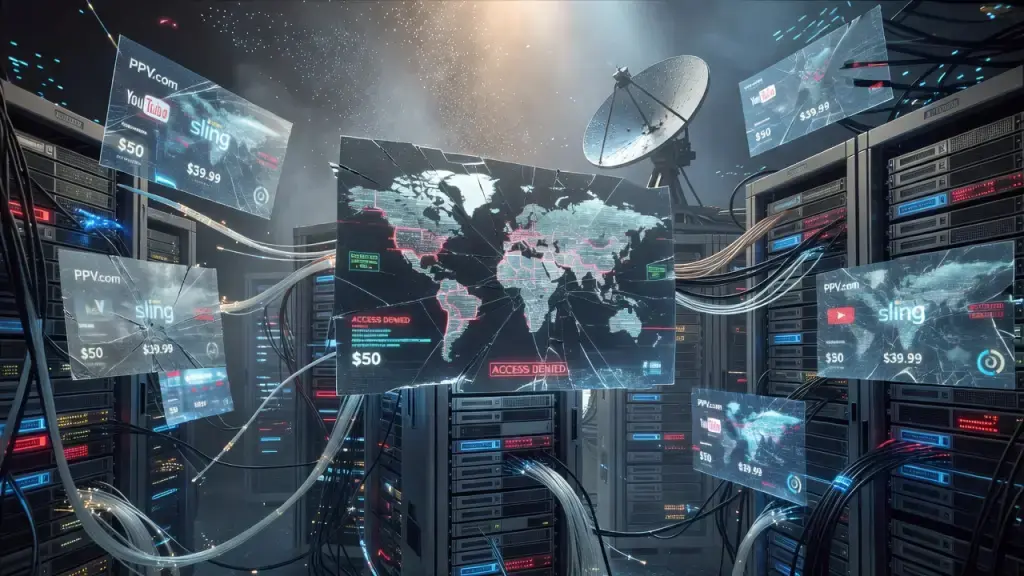
The mechanism behind these restrictions is straightforward. Streaming services determine a user's location through their IP address, and platforms license content on a country-by-country basis. A subscriber who has already paid for MyAEW or Amazon Prime in their home country can find themselves locked out entirely the moment they cross a border, simply because the server sees a foreign IP and blocks the stream accordingly. This is not a security measure in the traditional sense - it is a contractual one, rooted in licensing agreements rather than any technical necessity.
What a VPN Actually Changes
A virtual private network routes a user's internet traffic through a server in another location and encrypts that traffic in transit. The practical effect for streaming is that the platform sees the VPN server's IP address rather than the user's actual one, which can restore access to a service the user has already paid for. The encryption layer also serves a genuine security function, particularly on unsecured public networks like hotel or airport Wi-Fi, where unencrypted traffic can be intercepted by anyone else on the same network. These are two distinct benefits - location flexibility and traffic protection - and it is worth understanding them separately rather than treating a VPN as a single catch-all fix.
Trade-offs Worth Weighing
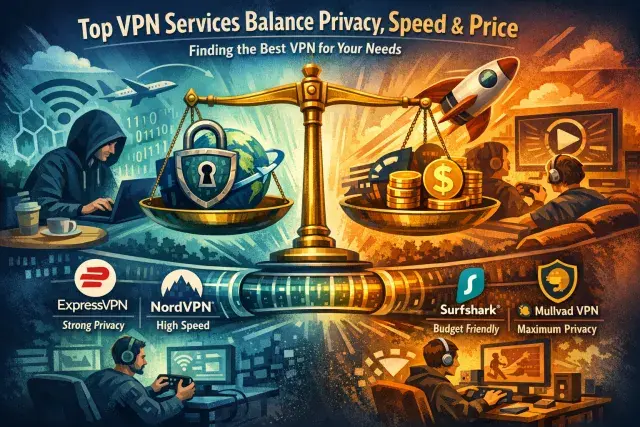
VPNs are not without limitations. Routing traffic through an intermediary server can reduce connection speed, which matters for live events where buffering ruins the experience. Streaming platforms also actively detect and block known VPN server ranges, so reliability varies between providers and can change without notice. Legally, using a VPN is permitted in most countries, including the US, UK, Canada, and Australia, but it typically sits in a gray area with respect to a streaming service's own terms of service - the service itself may suspend an account for circumventing regional restrictions, even though no law has been broken. Anyone choosing a provider should also consider its jurisdiction and logging practices, since a VPN only protects privacy if the company operating it is not itself retaining user activity records.
Pricing for WrestleDream reflects this patchwork: US viewers can expect to pay around $50 through most platforms or $39.99 via HBO Max, UK fans around £14.99 through Amazon, and MyAEW subscriptions run roughly $19.99 monthly or $119.99 annually. For the global audience trying to watch Ospreay's new title format or Moné's title defense live, the real obstacle this weekend has less to do with wrestling and more to do with how modern streaming rights are carved up by geography.